
Serapeum of Alexandria
Discover the Serapeum of Alexandria, a monumental temple dedicated to the Greco-Egyptian god Serapis, steeped in history and grandeur.
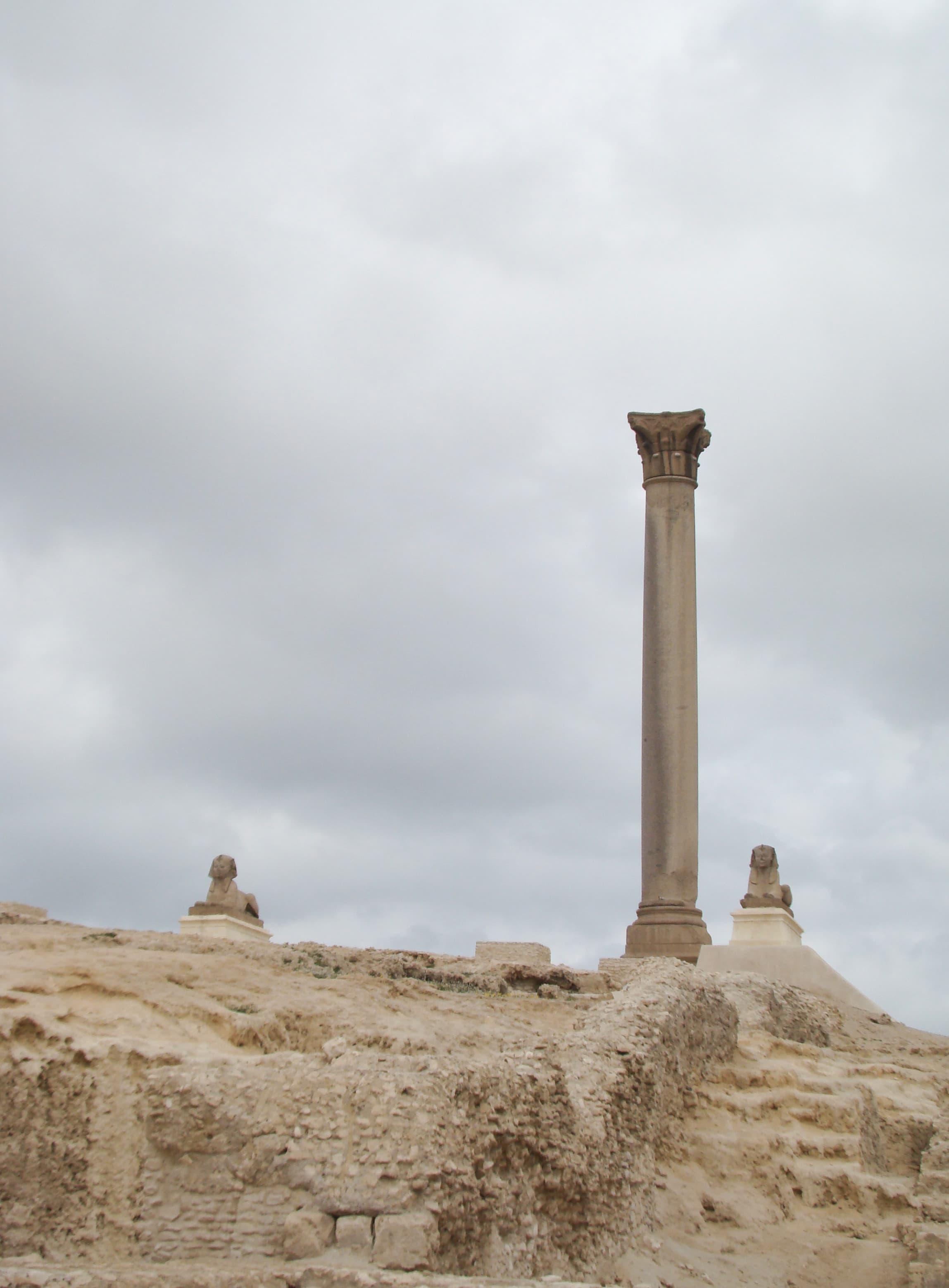
Historical Overview
Constructed in the 3rd century BCE during the reign of Ptolemy I, the Serapeum of Alexandria served as a major religious and cultural center, dedicated to Serapis, a deity embodying both Greek and Egyptian elements. This grand temple complex housed a massive statue of Serapis and was part of a larger sanctuary that included a library and an important pilgrimage site, attracting worshippers from all over the Hellenistic world. Its architectural splendor, featuring striking columns and intricate sculptures, symbolized the fusion of Greek and Egyptian cultures, showcasing the city's rich heritage. Throughout its history, the Serapeum played a pivotal role in the religious and political landscape of Alexandria. It became a focal point of conflict during the rise of Christianity, leading to its eventual destruction in the 4th century CE under the orders of Bishop Theophilus. The site not only exemplifies the cultural syncretism of ancient Alexandria but also reflects the tensions that marked the transition from paganism to Christianity, making it a fascinating point of interest for historians and tourists alike. For modern visitors, the Serapeum site is a must-see, offering a glimpse into Alexandria's storied past. Although much of the original structure has been lost, the remnants provide insight into the temple's grandeur, while nearby museums showcase artifacts and detailed explanations of the site's significance. Located in the heart of Alexandria, the Serapeum is easily accessible, allowing travelers to immerse themselves in the rich tapestry of Egyptian and Greco-Roman history.
Why Visit?
Pairs naturally with Kom el-Shoqafa for a compact ancient-Alexandria half day.
Getting There
Destination
سرابيوم الإسكندرية
من فضلك وديني سرابيوم الإسكندرية
Media Gallery
Remains of the Serapeum of Alexandria
Good to Know
Audience Fit
Historical Timeline
Associated Periods
Lifecycle Highlights
The Serapeum was built during the reign of Ptolemy III Euergetes (246–221 BCE).
The Serapeum was closed and destroyed in 391 CE during conflict between Christians and pagans.